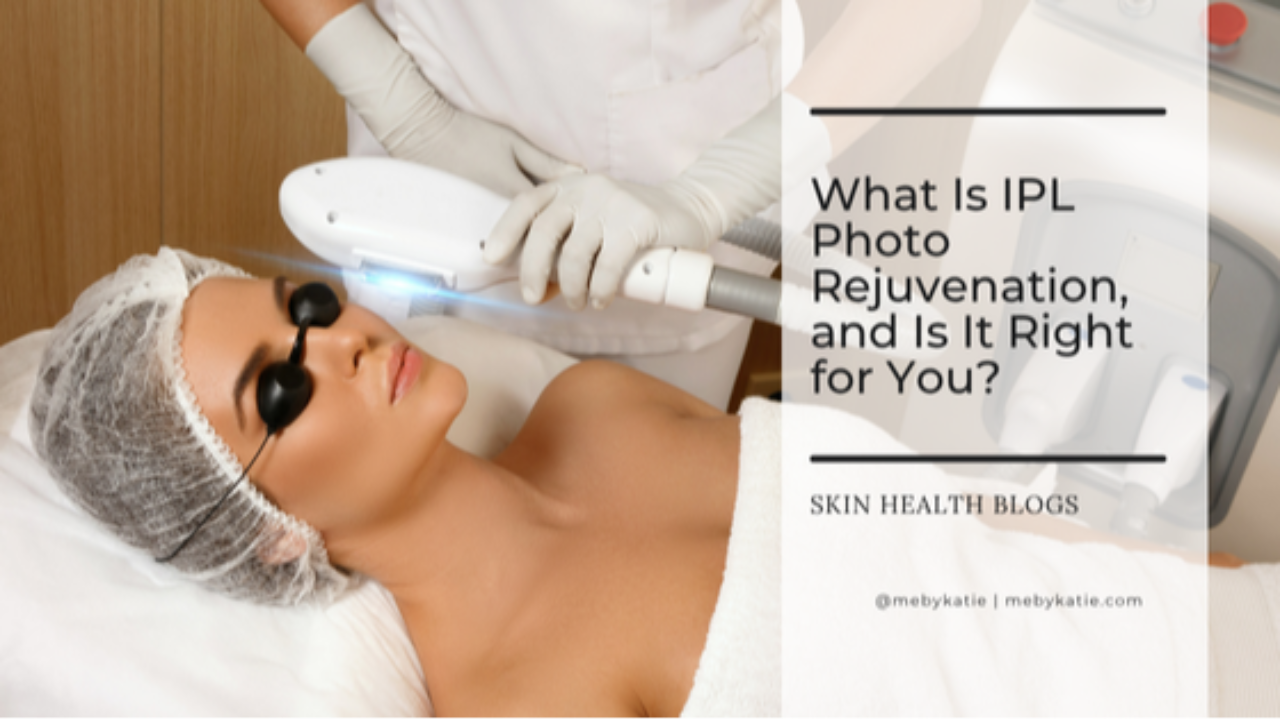
What Is IPL Photo Rejuvenation, and Is It Right for You?
Oct 17, 2026If you've got sun spots, redness, broken capillaries, or just skin that looks like it's lived through a few too many summers without SPF, IPL might be the treatment you've been hearing about and wondering if it's worth it. Short answer: for the right skin, yes. Let's break down what it actually is and whether you're a candidate.
IPL stands for Intense Pulsed Light, and it's a non-invasive treatment that targets photo-aged skin, meaning skin that's showing damage from years of sun exposure. It's not a laser, even though people often lump it in with laser treatments. IPL uses broad-spectrum light instead of a single focused wavelength, which makes it versatile.
What IPL Actually Treats
This is where IPL earns its reputation. It targets several skin concerns in one treatment:
- Age spots and sun-induced freckles, sometimes called sun damage or hyperpigmentation, fade significantly because the light targets excess melanin and breaks it down.
- Rosacea and redness from broken facial veins respond well too, since IPL targets pigment in blood, meaning it can address visible red vessels and general redness without affecting the surrounding skin.
- Most benign brown pigment, the kind that shows up as uneven tone or flat brown patches, responds to the same mechanism.
IPL is popular because it treats the whole face, not just one spot. You don't walk out with one fixed freckle and everything else looking the same. You get an overall, more even, more refreshed complexion.
How It Actually Works
IPL delivers light energy into the skin, where pigment in sun spots or hemoglobin in broken vessels absorbs it. That energy converts to heat, which damages the targeted pigment or vessel without harming the surrounding tissue. Your body then naturally clears away that damaged pigment over the following days and weeks, and spots gradually fade while redness calms down.
Every treatment plan should be tailored specifically to your skin condition and skin type. This isn't a one-size-fits-all setting on a machine. Your esthetician should adjust the treatment based on what you're dealing with and how your skin responds.
Why People Choose IPL Over Other Resurfacing Options
Compared to more aggressive resurfacing treatments, IPL has a few clear advantages. Recovery time is fast, often with little to no downtime, so you're not hiding indoors for a week. Client tolerance is generally good, meaning most people find the sensation manageable without needing much numbing. Sessions are short, and the safety profile is strong when a trained professional does it on the right candidate.
What to Actually Expect
This isn't a one-and-done treatment, and if anyone tells you it is, be skeptical. IPL is typically done in a series of three to five sessions, spaced a few weeks apart, allowing gradual improvement rather than one dramatic and potentially harsh change. This staged approach is actually a good thing. It gives your skin time to heal between sessions and lets your esthetician adjust as your skin responds.
The results build cumulatively, and most people see continued improvement even after their last session as the body finishes clearing pigment and calming inflammation.
Who's Actually a Candidate
Here's the part that trips people up. IPL can only be performed on Skin Types 1 through 3 on the Fitzpatrick scale, meaning lighter skin tones. This isn't arbitrary. Because IPL targets pigment, deeper skin tones have more melanin throughout the skin, not just in sun spots. That means the treatment can't distinguish between the pigment it's supposed to target and your natural skin tone, which puts darker skin types at real risk for burns, scarring, or pigment changes.
If you fall outside that range, you still have options. It just means IPL isn't the safe choice for you, and a good esthetician will be honest about that instead of pushing you into a treatment your skin type can't safely handle. Many other resurfacing and pigment-correcting options are built specifically for deeper skin tones, and that's a conversation worth having during a consultation.
Bottom Line
IPL is one of the most effective ways to address sun damage, redness, and uneven pigment in a single treatment plan, but it's not universal. It works because it's precise, and that precision is exactly why skin type matters so much. If you're Skin Type 1 through 3 and dealing with sun spots or rosacea-related redness, this is worth a real conversation with your esthetician about whether it fits your skin's specific needs.
Content Copyright © 2026, MBK Cultivate Skin & Nutrition Wellness
Permission to Reprint
You may use any items from this article in your print, blog, magazine, or electronic newsletter. You must include the following paragraph, with a link to www.mebykatie.com:
"Information courtesy of www.mebykatie.com. Katie Marshall is a Certified Medical Esthetics Practitioner, Integrative and Functional Nutritionist, and Holistic Chef specializing in skin, gut, hormone, and whole-body health. Her work is rooted in functional nutrition, addressing root causes rather than just managing symptoms, with a personalized, holistic approach that works alongside your existing medical team."
Health & Medical Disclaimer
The content shared by MBK Cultivate Skin & Nutrition Wellness, across social media, our website, and any other distributed materials, is intended for educational purposes only and reflects Katie Marshall's personal and professional opinions. While care has been taken to confirm accuracy and reflect generally accepted practices, this content is not a substitute for professional medical advice, diagnosis, or treatment, and should not be relied on as one.
Katie Marshall is not a doctor or medical provider and does not offer medical advice. If you're pregnant, nursing, managing a medical condition, or taking medication, consult your physician or a qualified healthcare provider before making changes based on this content. Never delay or disregard professional medical advice because of something you've read here.
If you're experiencing a medical emergency, contact your physician, go to the nearest emergency department, or call 911 immediately.
Use of this content, and any action taken based on it, is at your own risk. Neither Health Canada nor the FDA has evaluated the statements made here.
Being HEALTHY Doesn't Have to Be Hard!
Get the free 5-Day Hormone Detox:
Free for Estheticians
The Holistic Acne Business Checklist for Estheticians
A business-building guide for estheticians who want to support acne clients with more than products, protocols, and guesswork.
In accordance with federal regulations (CASL), please only provide your email address if you are consenting to receive future emails from MBK Cultivate Skin & Nutrition Wellness regarding news, coaching, programs and skincare products. You will have the opportunity to unsubscribe at any time and your email address will not be shared or sold.

Your diet is integral to hormone health, especially by regulating your gut health, which can have an effect on your skin and mental health.